Visit us on Google+

Friday, 3 October 2014

Traditional gamelan music.


A set of gamelan.
Gamelan is a musical ensemble that usually highlight metallophone, xylophone, drums, and gongs. The term gamelan refers to the instrument / tool, which is a unified whole that is realized and sounded together. Gamelan word itself comes from the Javanese gamel which means hitting / beating, followed by an ending that makes it a noun. Gamelan orchestra mostly found in the island of Java, Madura, Bali, and Lombok in Indonesia in various types of sizes and shapes ensemble. In Bali and Lombok today, and in Java through the 18th century, the term gong is more considered synonymous with gamelan.
Occurrences gamelan preceded by Hindu-Buddhist culture that dominated Indonesia in the early days of recording history, which also represents the original Indonesian art. The instrument was developed to shape up like this in the days of the Majapahit Kingdom.Unlike the music of India, the only impact to the Indian-ness in gamelan music is how to sing. In Javanese mythology, the gamelan was created by Sang Hyang Guru in Saka Era, the god who controlled all the land of Java, with palaces on the mountain Mahendra in Medangkamulan (Lawu now).

Sang Hyang Guru first create gong to summon the gods. For a more specific message then create two gongs, and finally formed a set of gamelan.
The description of the first ensemble of musical instruments found at the Borobudur Temple, Magelang, Central Java, which has stood since the 8th century. Musical instruments such as the bamboo flute, bells, drums in various sizes, harp, stringed musical instrument that is swiped and learned, are found in these reliefs. However, little is found elements of metal musical instruments. However, relief of the instrument is said to be the origin of the gamelan.
Gamelan orchestra tuning and manufacturing is a complex process. Gamelan tuning using four ways, namely sléndro, pélog, gamelan (special area of Sunda, or West Java), and madenda (also known as the diatonic, the same as the original minor scale that is widely used in Europe.

Gamelan music is a combination of the influence of foreign art diverse. Linkages not the tone of Chinese, Southeast Asian musical instruments, drum band and move to music from India, bowed strings from the Middle East, Europe and even the military style that we hear on the traditional music of Java and Bali today.
The interaction component is loaded with melody, rhythm and timbre maintain Balinese gamelan orchestra music heyday. The pillars of this music brings together a variety of Balinese rural community character that became the order of the typical music that is an inseparable part of daily life.
But this time the gamelan is still used on formal occasions such as weddings, thanksgiving, and others. but at this point, just used majority community gamelan of Java, especially Central Java.

Traditional Musical Instruments Gamelan.

A group of percussion instruments, consisting of drums, xylophone, gongs, gender, siter, bonang, slenthem, demung, saron, kenong, kethuk, kempyang, kempul, lined in a typical formation. Central stringed instrument played with a fiddle and zither. That is the traditional musical instrument called the gamelan. This article will delve further into traditional gamelan instruments.

Traditional gamelan music instrument that is widely known in Central Java and Yogyakarta is one of the types of traditional art that is able to survive in the middle of the rush of the modern entertainment industry. Traditional gamelan musical instruments barreled pelog tone (diatonic) combined with the barrel slendro tone (pentatonic) produces a harmonious ensemble music, great, and melodic.

Names of traditional gamelan instruments derived from the word "gamel", which means "hit." This is because in the early development of traditional gamelan music instruments are dominated by percussion instruments (tap), which is then combined with other instruments, such as fiddle (friction ), zither (quotation), and flute (inflatable).

In the past, traditional gamelan musical instruments used to accompany the puppet show, Ketoprak, ludruk, and some types of traditional theater in Java and Yogyakarta. In the show, incorporated elements of the art of music, sound art, and art to add to the charge dramatic theater performances.

In subsequent developments, traditional musical instruments played gamelan began separately as an accompaniment track. After that, the traditional gamelan instruments developed into its own much loved art.

History and Types of Traditional Musical Instruments Gamelan.

The development of Hindu-Buddhist religions that dominate the archipelago in the early days of recording history, gave a very strong influence on the art of traditional gamelan instruments. This example looks at the myths of traditional gamelan instruments that supposedly created by Sang Hyang Guru in Saka Era, the ruler of the gods that reigned in the land of Java, Mount Mahendra.

Traditional gamelan musical instruments has been widely known since before the 8th century, this is evidenced by the discovery of gamelan reliefs at Borobudur. In fact, the reliefs, traditional musical instruments have played with gamelan musical instruments flute, bells, harps, and stringed musical instrument played by means swiped.

Intersection of foreign cultures led to a variety of musical colors that are absorbed into the structure of gamelan music, such as the pattern of tone notation that has nothing to do with China, Asian musical instruments, drums and rhythm music band East India, bowed strings Middle East region, even stylemiliter Europe.

Acculturation produced several types of traditional gamelan musical instruments, such as:


Gamelan Klenengan, grown in areas Yogyakara, Klaten and Solo. Gamelan played here only as an instrument to accompany singers (waranggana) and equipped with Gerong (sort of backing vocals), without an accompanying dance attraction.
Gising Gamelan Bonang (Solo) and gising Soran (Jogjakarta), which does not use any musical instruments other than percussion.
Sekaten Gamelan, which was played at the closing ceremony Sekaten, slightly larger than gising Soran.
War Gamelan, Gamelan bit more complex than usual, with musical instruments such as drums, gongs, gubar, gurnan, bahri, drums, flute, puksur, casks, and the task of fully comprehending gangsa. Gamelan is to accompany the soldiers.
Gamelan Gong Kebyar (Balinese), is gamelan has such dikreasi and many displayed in the show for the tourists.
Gamelan Angklung (Bali), is a jovial tone gamelan angklung music with ornaments, displayed for temple festivals.
Gender Wayang, is gamelan gender wayang play musical instruments in pairs or quartets. Including the type of gamelan elite, emotion plays music and is the most complex structure in Bali.
Tuning Tone Gamelan Traditional Musical Instruments
In the art of traditional gamelan instruments, used musical instruments can achieve 70 kinds, even more. Tuning the tone in the formation process of the art to its present form, is very complex. 

Traditional Gamelan music instrument tuning tone recognize four types, namely: 


Slendro, pentatonic tones. 
Pelog, diatonic tones. 
Gamelan, tones and Sundanese of West Java. 
Madenda, which resembles the tone diatonic minor scale is widely used in European music. 
In a game of complete gamelan traditional musical instruments, played two rounds, the slendro (having 5 tones per octave) and pelog (having 7 tones per octave). In gamelan composition, some round up pathet, and ends with a gong. 

Traditional Gamelan Musical Instruments wandered 


Currently, the traditional gamelan musical instruments has been known to the world and became one of the music that is popular in international circles. In fact, the gamelan has collaborated with various other types of music, such as jazz, fusion, pop, and others. 

gemelan traditional musical instruments known to the world since Claude Debussy, a French composer pride, watching performances of gamelan in the Exhibition of the Universe at that time 1889, Debussy was fascinated with the gamelan, and make comparisons, "compared with the gamelan, the music of Palestrina polyphony like child's play, whereas Western music became impressed barbarian. "

At the beginning of the 20th century, Robert Brown brings Balinese musicians to UCLA to teach traditional gamelan instruments. At that time, the country's growing high interest in Asian music. 

Raden Jodjana, a Javanese nobleman and artist who was a student in Rotterdam, the Netherlands, presenting traditional musical instruments in the gamelan performances Kunstavond Indies, Indian art night, which was held in The Hague in 1916 At that stage, also attended Queen Wilhelmina and several ministers, as well as the Dutch elite. 

Currently, the traditional gamelan instruments already enliven the world music scene. In fact, composers from around the world composed by combining gamelan or incorporate elements of local music. In this process, continued use of tone adjustment, harmony, and other musical components. 

Enjoying the Traditional Musical Instruments Gamelan performances in Yogyakarta.

Traditional musical instrument gamelan music is not foreign. Popularity of traditional gamelan instruments already spread to various continents. In fact, had given birth to a new musical blend of jazz-gamelan and produce famous gamelan musicians. Performances of traditional gamelan instruments can be enjoyed anywhere, but Yogyakarta is the most appropriate place to enjoy performances of traditional gamelan musical instruments because here you can enjoy the original version. 

Traditional gamelan musical instruments developed in the city of Yogyakarta is Javanese gamelan, gamelan different forms with traditional musical instruments as well as Sundanese Gamelan Bali. Javanese gamelan has a tone that is slow and softer, while the Balinese gamelan are dynamic and Sundanese gamelan lilting character. 

Traditional gamelan musical instruments can be seen as a musical Instruction alone or as a dance and performing arts such as wayang kulit and Ketoprak. One of the places to see performances of traditional musical instrument is the gamelan in Yogyakarta in Yogyakarta Palace. Performing traditional gamelan musical instruments was held on Thursday and nature as separate musical performances. 

On Saturday, held performances of gamelan musical instruments as accompaniment shadow puppets. Meanwhile, on the day of the show Minggudigelar traditional gamelan musical instruments as accompaniment traditional Javanese dance. This show can be seen in Ward Sri Maganti. To see the old gamelan traditional musical instruments, the visitors can go the other Kraton Ward located at the rear. 
Thank you for reading this article. Written and posted by Bambang Sunarno. sunarnobambang86@gmail.com 
author: 
http://schema.org/Personal. 
https://plus.google.com/105319704331231770941. 
name: Bambang Sunarno. 
http://www.faradice.blogspot.com/traditional-gamelan-music.html 
DatePublished: October 3, 2014 at 21:05
Tag : Traditional gamelan music. 
Code : 42S4EUXRR3UM

Instrument traditional violin.


sedang memainkan rebab.

Fiddle in Turkey. 

Rebab (Arabic الربابة or ربابة - "bow (instrument)"), also rebap, rabab, rebeb, rababah, or al-rababa) is a type of stringed musical instrument so named no later than the 8th century and spread via pathways Islamic trade more than North Africa, the Middle East, parts of Europe, and the Far East. Some varieties often have stalks at the bottom that can fiddle resting on the ground, and thus called stalk fiddle in certain areas, but there are versions that are picked as kabuli rebab (sometimes referred to as robab or rubab).
Fiddle size is usually small, rounded body, the front of which is covered in a membrane such as parchment or sheepskin and has a long neck attached. There is a long thin neck with a pegbox at the end and there are one, two or three strings. There is no tone board. This instrument was made upright, either resting on the lap or on the floor. Bow is usually more curved than the violin.
Rebab, though valued for its voice, but has a very limited range (little over an octave), and gradually replaced in much of the Arab world by the violin and kemenche. It is associated with the instrument Iraq, Joza, which has four strings.
Introduction fiddle to Western Europe has been possible in conjunction with the conquest of Spain by the Moors, in the Iberian Peninsula. However, there is evidence of the existence of this instrument in the 9th century also in Eastern Europe: the Persian geographer of the 9th century Byzantine lira quoting Ibn Khurradadhbih (or Lura) as a typical musical instrument bow Byzantine and Arab rabab equivalent.

Construction. 

Fiddle is used in a wide variety of musical ensembles and genres, corresponding with a wide distribution, and is built and played somewhat differently in different regions. In Southeast Asia, the rebab is a large instrument with a range of viola da gamba similar to, while the version of the instrument further west tend to be smaller and higher pitched. Body varies with ornately carved, as in Java, for simple models such as the "fiddle of the Nile" Egypt 2 strings may have a body made of half a coconut shell. A more advanced version has a metal ballot box and the front maybe a half-covered with beaten copper, and half with cowhide.

Arabic, Persian and Ottoman. 

Fiddle was widely used, and continues to be used, in Persian traditional music. There is also a bow instrument in Persian music named Kamanche which has the same shape and structure. Trigon also played in other countries like India, most likely trace the origin of the Iranian Kingdom because of its use in the Sassanid court. It was adopted as a key instrument in Arab classical music and in Morocco, the Arab-Andalusian music tradition has been kept alive by descendants of Muslims who left Spain as refugees following the Reconquista. The fiddle became a favorite instrument of the Ottoman Empire at the tea house (Turkey) until the arrival of the violin, the only musical instrument bow in the Ottoman Empire.

Asian hinterland. 

Trigon game in Banjarmasin (1910-1925 era).
Variant violin stalk is very commonly used by many ethnic groups of East and Central Asia and their diaspora around the world, such as various Huqin used by the majority of Chinese ethnic groups, morin Khuur of Mongolia, Byzaanchy of Tuva, Kokyu of Japan, Haegeum of Korea, Kyl Kiak of Kyrgyzstan, Saw sam sai of Thailand and many others. It is commonly used in playing traditional folk songs, but also became popular in contemporary music settings, including genres such as classical, jazz, and rock.

Indonesia and Malaysia. 

In Indonesian gamelan the rebab is an important instrument in the elaborate and adorn the basic melody. It does not have to correspond exactly to the scale of the other gamelan instruments and can be played in a relatively free, the completion of the phrase after the boom of the gong ageng (big gong that "regulate" the ensemble). Rebab also frequently plays the open when it was part of the ensemble.
In the eastern state of Malaysia, Kelantan and Terengganu, fiddle used in a healing ritual called "Main Puteri". The musician healer is sometimes taken to hospitals in cases where doctors can not cure a sick patient.

Learn more Traditional Musical Instruments "Trigon" 

Who has not heard the term fiddle? Fiddle is one musical instrument that is fairly old, at least, Trigon has been known since the 9th century AD. Have the origin of the word fiddle fiddle, rebap, rabab, rebeb, rababah, or al-rababa the uptake of the Arabic language, which means (arc) or (gondewa), as the development fiddle himself came to Indonesia through trade routes Islam over much of North Africa, the Middle East, parts of Europe, and the Far East (East and Southeast Asia).

As usual you see, in these areas, especially areas of West Java, fiddle is a musical instrument that has two or three pieces of strings are made ​​of metal, to fiddle her own material used is copper. To play this instrument in a manner that is swiped, you can imagine how to play this instrument that his violin playing musical instruments.

Trigon material. 

As noted above, that the fiddle is usually made ​​of copper, but along with the development of traditional musical instruments in Indonesia has undergone a revolution fiddle, fiddle parts are no longer made ​​of copper instead of natural raw materials. In longitudinal section, fiddle made ​​of jackfruit wood, then on the heart-shaped body is made of hollow wood and covered with skin, intestine, or urinary dried ox, as a resonator or a loudspeaker, while the fiddle is a musical instrument that is included in the range of devices commonly used in gamelan accompany a puppet show, kliningan, or as an accompaniment song celempungan Cianjuran (mamaos) with harp and flute, is also used as a tool in praising sinden. Particularly in the gamelan, fiddle functions not only as an accompaniment, but also serves to guide the direction of the song.

Trigon has a unique sound, with the sound of softly bowed instrument made ​​in one of the opening in the puppet arts performances, in addition, with the tone wide area coverage and can fit into any barrel, fiddle used as a determinant of the direction of the song and also guides other musical instruments switching from one atmosphere to another. No wonder there is a mention that the fiddle is a song leader. Really how important fiddle in a song is not it? How not, fiddle like a driver in a motor vehicle and a car, like the driver in the train, and like a pilot in an airplane. Although the fiddle has a very important position in a song, but not many people are interested and the usual play especially among young people. It is time fiddle has an important position in a song and in the development of traditional music in Indonesia, hopefully the younger generation does not forget an important instrument of this one, so the song-songs and performances that require fiddle strains can still be enjoyed by children, our grandchildren in the future.
Thank you for reading this article. Written and posted by Bambang Sunarno. sunarnobambang86@gmail.com 
author:
http://schema.org/Personal.
https://plus.google.com/105319704331231770941.
name: Bambang Sunarno. 
http://www.faradice.blogspot.com/2014/10/instrument-traditional-violin.html
DatePublished: October 3, 2014 at 12:55
Tag : Instrument traditional violin.
Code : 42S4EUXRR3UM

Thursday, 2 October 2014

History of angklung worldwide.

There is no definite source that says the beginning of the emergence of musical instruments typical of West Java.  But no doubt that the musical instrument angklung is an Indonesian culture hundreds of years old. The oldest known angklung contained in Jasinga, Bogor, West Java, which is estimated around 400 years old. The oldest is called angklung angklung Gubrag.Tak only in West Java, this instrument is also found in several regions in Indonesia such as Bali, Madura and Kalimantan.

Angklung began known by the public at the time of the Sunda kingdom. It used to serve as an encouragement at a time of war. This continues until the colonial era in Indonesia nation's natural.

The music in it was largely inspired from Nyai Sri Pohaci (goddess of rice) or often called Goddess Giver of Life. Because the myths that developed in the community first and then the artists create a kind of poetry and song as a tribute to Sri Nyai Pohaci through this angklung art.

At the time of emergence, the actual musical instrument Angklung is regarded as sacred because of its presence to accompany Spells - spells that in alunkan when certain rituals. This changed since 1938, Angklung Daeng Soetigna creates an underlying Diatonic sound. Since then Angklung be closer to the arts than the field of mystical and occult.

Gradually Angklung was known all over the world. Recognition of the existence of a musical instrument Angklung first recognized by a great musician from Australia namely Igor Hmel Nitsky on tahun1955. Angklung is growing even today. Recorded a world record playing angklung been created in Beijing, China through events organized by the Embassy involving 5,393 participants in the Beijing Workers' Stadium.

How Playing Angklung Musical Instrument Technique. 

At least there are two of the most common ways of playing a musical instrument angklung, namely the vibrated and beaten (dashed tolled or centok). Here are presented some of the techniques that can be used to play angklung well.

Angklung thrilling. 

Angklung is vibrated in the long rung with the appropriate value of the tone being played.

Dotted ring a, Beaten (Centok). 

Angklung is not vibrated, it struck the tip of the tube base (horizontal) by his right hand to produce centok (like the sound of blows). It is useful to play a short tune as a sign of pizzicato music.

Tengkep. 

Angklung is pronounced with a long pulsed tones are played according to the value, but not as small tubes usually covered by one finger left hand so it does not sound (which sounds just great tube only). It is intended that can be produced more subtle tones within their music needs to be played (eg to mark the dynamics of the piano).

Disconnected. 

As presented by the teacher Mr. Daeng Angklung diatonic Soetigna, then it is advisable to ring tone angklung is disconnected. This is done with the following techniques: if there are two notes played consecutively, so that the audible tone is sounded disconnected it first sounded slightly longer than the value of its tone, so that when the second tone starts playing, the first tone still sounds a little, so that the strains of the tune sounds disconnected and not drop out.

Dynamics (loud and soft). 

As per the needs of the song, angklung can be played softly (piano) over loud (forte). It is recommended for both types of dynamics should be the frequency of vibrations per second angklung remain the same in number, whereas different is the distance angklung swing by the right hand which in turn will determine the amplitude of vibration and cause hard or softly lnada played.
Thank you for reading this article. Written and posted by Bambang Sunarno. sunarnobambang86@gmail.com 
author:
http://schema.org/Personal.
https://plus.google.com/105319704331231770941.
Bambang Sunarno name. 
http://faradice.blogspot.com/2014/10/history-of-angklung-worldwide.html
DatePublished: October 2, 2014 at 11:17
Tag : History of angklung worldwide. 
Code : 42S4EUXRR3UM

You Know angklung.

angklung.
Angklung is a musical instrument multitonal (double pitched) which is traditionally grown in the Sundanese people in the western part of Java Island. This musical instrument made ​​of bamboo, sounded shaken by the way (the sound caused by the clash of bodies bamboo pipes) so as to produce sound that vibrates in the arrangement of tones 2, 3, to 4 tones in every size, both large and small. Dictionary of the Sunda Language by Jonathan Rigg, published in 1862 in Batavia, wrote that Angklung is a musical instrument made ​​of bamboo pipes, cut the edges, resembling the pipes in an organ, and tied together in a frame, vibrated to produce sound. Angklung is listed as Masterpieces of Oral Heritage and Human Nonbendawi of UNESCO since November 2010.

The origin.

Children playing angklung West Java in the early 20th century.
No clue since when angklung used, but is thought to have been used in the form of primitive Neolithic culture that flourished in the archipelago until the beginning of the modern calendar, so angklung is part of the relics of the pre-culture of Hinduism in the archipelago.
Notes on new emerging angklung refer to the Sunda Kingdom (12th century to 16th century). The origin of the creation of bamboo music, such as angklung based view of the agrarian life of Sundanese people with a source of life of paddy as a staple food. This gave rise to the myth of trust in Nyai Sri Pohaci as a symbol of life-giving Goddess of Rice (breathe-hurip). Baduy, who is regarded as the remnants of native Sundanese people, applying angklung as part of ritual began planting rice. Gubrag angklung game in Jasinga, Bogor, is one that is still alive since more than 400 years ago. Appearance originated from rice rites. Angklung created and played to lure Dewi Sri down to earth people that rice plants thrive.
Bamboo species commonly used as a musical instrument is a black bamboo and white bamboo. Each tone (barrel) is generated from the sound tube-shaped bamboo slats each segment of bamboo from small to large.
Known by the Sundanese community since the time of the Sunda kingdom, like the spirit in battle. Angklung function as pumping continues to feel the spirit of the people still came to the colonial period, that's why the Dutch East Indies government had banned the public use angklung, the ban could make angklung popularity declined and only played by children at that time.
Furthermore, the songs offerings to Dewi Sri is accompanied by the sound of percussion accompaniment made ​​from bamboo poles that simple packed structures which then was born the bamboo musical instrument we know today named angklung. Similarly, during the harvest festival and seren taun angklung dedicated game. Especially at the presentation ceremony Angklung related to rice, this art into a nature show or helaran procession, even in some places into the convoy of Rengkong and Dongdang and Jampana (stretcher food) and so on.
In its development, angklung grow and spread throughout Java, then to Kalimantan and Sumatra. In 1908 recorded a cultural mission from Indonesia to Thailand, among others, marked the delivery of angklung and bamboo music of this game also had spread there.
In fact, since 1966, Udjo Ngalagena -tokoh angklung developed a technique based on barrel-barrel game pelog, salendro, and madenda began to teach how to play angklung to many people from various communities.

Type Angklung.

Angklung Baduy.
Angklung Baduy area (we often call them Baduy) is used primarily because of its association with the rite of rice, not solely for the entertainment of the people. Angklung is used or rung when they grow rice in huma (fields). Angklung beat when growing rice there is only rung free (dikurulungkeun), especially in Kajeroan (Tangtu; Baduy Jero), and there is a certain rhythm, which in periode (Outer Baduy). Nevertheless, it can still be displayed outside the rite of rice but still have rules, for example, only be beaten by the ngubaran pare (treating paddy), about three months from the time planted rice. After that, during the next six months all the arts should not be played, and should play again in the next rice planting season. Closes angklung implemented with event called musungkeun angklung, namely nitipkeun (left, save) angklung after use.
In entertainment offerings, Angklung usually held when the bright moon and no rain. They play in the game Angklung (pages widespread in rural areas) while singing a variety of songs, including: monkey Kasarung, Yandu Aunt, Yandu Sala, Ceuk Arileu, Oray-orayan, Dengdang, Yari Gandang, Oyong-squash Kuhl, Kula Agency, Kokoloyoran, swing-swing, Pileuleuyan, gandrung Manggu, Rojak Bluebird, mulung Muncang, Giler, Ngaranggeong, Aceukna, Marengo, Salak Sadapur, Rangda Ngendong, Celementre, Keupat Reundang, Papacangan, and Culadi Dengdang. The drummers angklung eight people and three drummers drum small size makes the standing position while walking in a circle formation. Meanwhile, there are others who ngalage (dancing) with certain movements that have been standard but simple. Everything is done only by men. This is in contrast with Daduy In a society, they are limited by the rules of customary taboos (abstinence; taboo), should not be doing things excessive worldly pleasures. Arts solely for ritual purposes.
Angklung names in Kanekes of the biggest are: ovarian, ringkung, Dongdong, gossip, engklok, ovary leutik, torolok, and roel. Roel which consists of 2 pieces held by a angklung. The names of the longest drum are: drum, talingtit, and tap. The use of drum instruments there is a difference, namely in the villages they wear drum periode of 3 pieces. In Kajeroan; Cikeusik village, just use the drum and talingtit, without tap. In Kajeroan, Cibeo village, just use the drum, without talingtit and tap.
In Baduy Angklung is entitled to make the Kajeroan (Tangtu; Baduy Jero). Kajeroan consists of 3 villages, namely Cibeo, Cikartawana, and Cikeusik. In all three villages is not everyone can make it, just that and has the right to have offspring who do it in addition to the terms of the ritual. Angklung makers in the famous Cikeusik is Amir's father (59), and in Cikartawana Tarnah father. People buy from people Kajeroan periode in the three villages.

Angklung Reyog.

Reyog Angklung is a musical instrument to accompany dances Reyog ponorogo in eastern Java. Angklung Reyog has distinctive in terms of a very loud voice, has two tones and forms an attractive rattan arches (not including the angklung generally ang cuboid) with a decorative thread tasseled beautiful colors. The profiled Angklung is a weapon of Bantarangin kingdom against kingdom Lodaya in the 9th century, when the royal Bantarangin victory by the soldiers not to mention the holder of angklung excited, because the extraordinary power amplifier from the rope swing to produce a distinctive sound that is bell-shaped klong- and Klung-Kluk when heard will feel the spiritual vibrations.
Historically Reyog angklung is used in the film: Warok Singo Cobra (1982), Kick From Heaven (2011)
And the use of music such as angklung Reyog on: know opo tempe, vows palapa, Kuto reog, Rehearsal Endah Omber Girang, and smelling campursari ponorogoan.

Angklung Banyuwangi.

Angklung banyuwangi have a shape are like calung the cultural tone banyuwangi

Angklung Bali.
angklung bali has a distinctive shape and tone bali,

Angklung dogdog lojor.

Dogdog arts in the community lojor Kasepuhan Pancer Pangawinan or custom entity Banten Kidul scattered around Mount Mist (bordering Jakarta, Bogor and Lebak). Although this art is called dogdog lojor, the name of one of the instruments in it, but there also used angklung because the rituals associated with rice. Once a year, after harvest the entire community held a hand over Seren Taun Taun or in the center of the traditional village. Traditional village center as a place of residence kokolot (elders) where he is always moving as directed supernatural.
Tradition of respect for the paddy this society still held because they are among the people who still adhere to the old customs. By tradition they claim to be descendants of palace officials and soldiers in baresan Pangawinan Padjadjaran (soldier armed with a lance). Kasepuhan community has embraced Islam and somewhat open to the influence of modernization, as well as entertainment things worldly pleasures can be enjoyed. This attitude also affect the function of art in terms that since about 1970, dogdog lojor has been progressing, which are used to enliven the child circumcision, marriage, and other festive events. The instruments used in the art dogdog lojor is 2 pieces and 4 pieces dogdog lojor big angklung. These four fruit angklung has a name, which is the largest so-called bark, then panembal, Kingking, and inclok. Each instrument is played by a, so that all of six people.
Lojor dogdog songs in between Bale Agung, Side counter hideung, shaky-shaky Papanganten, Si stumps Kawung, Adulilang, and Adu-complaint. These songs form the rhythmic vocal dogdog and shakers tend to remain.

Angklung gubrag.

Angklung gubrag Cipining there in the village, district Cigudeg, Bogor. The Angklung is old, and is used to honor the goddess of rice in Melak activities pare (rice planting), ngunjal pare (transporting rice), and ngadiukeun (put) to leuit (barn).
In myth angklung gubrag started there was a time when the village Cipining had a bad season.

Angklung Badeng.

Badeng is a type of art that emphasize the musical aspect with angklung as the main instrument. Badeng located in the village of Sanding, Malangbong Subdistrict, Garut. It used to serve as entertainment for the sake of Islam. But Badeng allegedly been used since the old society of pre-Islamic days for events related to rice planting rituals. As for the art of propaganda is believed Badeng developed since Islam spread in the region around the 16th century or 17th At that time the population Sanding, Arpaen and Nursaen, studying Islam to the kingdom of Demak. After returning from Demak they preach spread Islam. One of the means it uses to spread Islam is the art Badeng.
Angklung used as many as nine pieces, namely 2 roel angklung, angklung kecer 1, 4 Angklung Angklung ovary and father, 2 angklung children; 2 dogdog fruit, fruit fly or gembyung 2, and 1 manacle. Text using Sundanese language mixed with Arabic language. In development now used also Indonesian. Fill the text contains Islamic values ​​and good advice, and according to the purpose of the event. In addition to presenting performances of songs, magic attractions also presented, such as cutting the body with sharp weapons.
Badeng songs: Lailahaileloh, Ya'ti, Kasreng, Yautike, Lilimbungan, Solaloh.

Beans.

Beans is a performing art that is entertainment, of which there are at Baros (Arjasari, Bandung). At first the beans used at events associated with rice farming. But at the present time beans are used as entertainment art. This is related to the changing views of society that began less heed smelly things the old beliefs. 1940 can be considered as the end of the ritual function in respect of rice bean, because since it snaps turned into entertainment. Along with the rice storage places too (leuit; barn) began to disappear from people's homes, places replaced with a more practical bag, and easy to carry everywhere. Rice also now many are directly sold, not stored in the barn. Thus art beans that had been used for events ngunjal (carrying rice) is not needed anymore.
The name associated with a bean art song texts are well known among the people, namely cis nyengcle chickpeas ... and so on. The text contained in bean art, so art is called beans.
The instruments used in the arts Angklung beans are 2 ovaries, 2 ambrug angklung, angklung panempas, 2 angklung pancer, 1 angklung enclok. Dogdog then 3 pieces, consisting of 1 talingtit, panembal, and badublag. In a later development, coupled with tarompet, manacle, and goong. Angklung beans barreled salendro the vocal track can be barreled madenda or gamelan. Beans songs include: Badud, Beans, Renggong, Senggot, Jalantir, Jangjalik, Ela-ela, Mega Beureum. Now the songs beans have used also the songs of the gamelan, the singer who was the man angklung players, now by a special lady to sing.
Of the several types of bamboo music in West Java (Angklung) above, are some examples of performing arts angklung, which consists of: Angklung Beans (Priangan / Bandung), Angklung Badud (Priangan East / Kudat), Angklung Bungko (Indramayu), angklung gubrag (Bogor), angklung Ciusul (Bantam), angklung Dog dog lojor (Sukabumi), angklung Badeng (Malangbong, Garut), and angklung angklung Padaeng which is identical to the National with diatonic scales, developed since 1938 a typical Indonesian angklung this comes from Sundanese angklung development. Sundanese angklung pitched five (salendro or pelog) by Daeng Sutigna aka The Etjle (1908-1984) changed his tone became Western scales (solmisasi) so that it can play a variety of other songs. Investment results then taught to school students and played a large orchestra.

Angklung Padaeng.

Angklung Angklung Padaeng was introduced by Daeng Soetigna since around the year 1938 is a breakthrough in the use of the barrel Padaeng angklung Diatonic tone corresponding to the western music system. Thus, angklung can now play international songs, and also can play in ensemble with other international instruments.

Angklung Sarinande.

Ahimsa is a term for the Angklung Angklung Padaeng round tone that only wears only (without tone chromatic scale) with the base tone C. The small unit contains 8 Angklung Angklung sarinade (tone Do Do Low to High), while sarinade plus contains 13 angklung (Low to tone Sol High mi).

Angklung Toel.

Angklung Toel created by Kang Yayan Udjo circa 2008 In this tool, there is a waist-high frame with some angklung dijejer upside down and given the rubber. To play, a player is simply download the angklung Toel and shakers will vibrate while because of the rubber.

Angklung Sri-Pure.

Angklung is an idea Eko Budi Mursito specifically created for the purposes of the robot angklung. As the name implies, the angklung was wearing two or more tubes sound the same tone, so it will produce a pure tone (mono-tonal). This contrasts with angklung Padaeng multi-tonal. With this simple idea, the robot easily play angklung combination of multiple effects simultaneously to mimic the melody and Angklung Angklung akompanimen.

Angklung Ensemble.

In order for a richer sound, angklung musical instrument should be played with others to form an ensemble. Some angklung ensemble was established:

Padaeng classic.

Angklung Ensemble classics introduced by Mr. Daeng Soetigna consists of:
angklung melodies
angklung akompanimen
Bas betot
The combination of at least this is the most popular and common at concerts and competitions alloy angklung.

Angklung solo.

Angklung solo is a configuration in which one unit angklung melody hung on a crossbar that can be played by one person alone. In accordance with convention diatonic tones, then there are two ranks hanger angklung, the bottom contains a full tone, while the top contains chromatic tones. Solo Angklung is initiated by Yoes Roesadi 1964, and played with musical instruments basanova in group calling itself Aruba (Strains Clump Bamboo). Around 1969, the name was adapted into Arumba Aruba.

Arumba.

Arumba is a term for a set of musical instruments (ensemble) which consists of at least   :
One unit angklung melody, hung so that it can be played by one person
One unit lodong bass, also dijejer to be played one person
Bamboo xylophone melody
Bamboo xylophone akompanimen
drum
The initial configuration of the ensemble introduced by Burhan Mochamad around 1966, who used it with a group "Arumba Cirebon".

Techniques angklung game.

Play an angklung very easy. A person living in one of the frame holding the hand (usually the left hand) so angklung hang freely, while the other hand (usually the right hand) shake up reads. In this case, there are three basic techniques to shake the angklung:
Kurulung (shakes), is the most commonly used technique, where the right hand holding the tube base and moving from side to side many times during the tone to be played.
Centok (jerky), is a basic technique in which the tube is pulled quickly by the fingers into the palm of the right hand, so it will beep once angklung (stacato).
Tengkep, such kurulung but one of the tubes being held not participate vibrate. In melodic angklung, angklung issued this technique causes a pure tone (one tone melody only, not two as usual). Meanwhile, the main akompanimen angklung, this technique is used to play a major chord (3 tones), because otherwise ditengkep that play is the dominant chord Septim (4 tones).
Meanwhile, to play the angklung unit to carry the song, it will take a lot of musicians, led by conductor. On each musician will be distributed 1-4 angklung with different tone. Then the conductor will prepare sheet music tracks, with strands of writing the songs that would be played. Conductor will give cues, and every musician should play angklung his tone according to the required length and beats conductor. In playing this song the players must also consider the continuous technique, the tone is heard only stopped as soon as the next note starts sounding.

Angklung practice.

Angklung is going to sound melodious and magnificent when played abuzz with the compact. This requires preparation and practice long enough, led by a coach who simply have a general understanding of music and shakers. The stages of preparation are:
Choose songs with arrangements. The songs are played with Angklung generally match the exuberant rhythmic, and if there are parts that can rancak, so that it can be improvised with centok techniques. This then needs to be re-arranged the song specifically for the angklung, by having multiple voices. For practice, this arrangement is then written on large paper (usually in the notation notes number).
Prepare unit angklung appropriate arrangements. Of arrangement angklung, angklung can be known how necessary based range tune intonation and balance.
Collect angklung players and distribute them. If there is a player that holds a lot of angklung, must be taken to ensure that the player will never play two angklung at the same time. It is usually used for tonjur table.

Heating.

Before practice, you should first relax your feet and hands, and then do the basic movements for kurulung and centok together.
Learning songs. Together, learn and explore groove track, where the verses and choruses to be repeated. Slowly play these songs under the direction of conductor. It is suggested that during the initial training of all tones in-centok course, do not dikurulung first.

Memorizing notes.

Gradually, the players are asked to memorize the notes of the song and the game.

Improve technique.

This is the final polishing stages, where the conductor can begin to lead with a game emphasizes simultaneity, dynamics, and inspiration.

Choreography.

If going to appear on stage, improvisation can begin to think about the players do an interesting movement, not standing still ongoing.

Angklung interactive. 

Interactive angklung is an activity where a conductor invites a lot of people, who generally lay, to play angklung abuzz. This activity can be done in a tourism or hospitality events. Will be distributed to participants angklung angklung numbers marked in accordance tone. Then, the conductor will lead, usually by means of:
Conductor opened the big screen in a note that read track number, then asked the participants to play angklung right tone by pointing on the screen.
Conductor teach hand signals for certain tones in the audience, and then lead a song by giving the right cues in sequence to follow the participants. This hand gesture at-adaptation by Mang Udjo, based cues developed by John Curwen.
Previously, Mr. Daeng Soetigna image cues animals use to train kindergarten children. Thank you for reading this article.
Written and posted by Bambang Sunarno. sunarnobambang86@gmail.com
author:
http://schema.org/Personal.
https://plus.google.com/105319704331231770941.
name: Bambang Sunarno.
http://faradice.blogspot.com/2014/10/you-know-angklung.html
DatePublished: October 2, 2014 at 10:38
Tag : You Know Angklung.
Code : 42S4EUXRR3UM

Sunday, 28 September 2014

Cockatoo king.

Cockatoo king
Cockatoo king or the scientific name is a kind of bird Probosciger aterrimus black cockatoos and large, with a length of about 60cm. This bird has a red cheek skin and large black-colored beak. There is a large crest on its head that can be enforced. Females are similar to males.
Cockatoo king is the only bird in a single clan Probosciger. Regional distribution of this bird is on the island of New Guinea and northern Australia. King Parrot bird feed consisting of grains. Parrot beak king can not be closed, due to the size of half of the top and bottom are different. And it's useful to hold and open the grain to be consumed.
Although the species is threatened by habitat loss and poaching of forest continued to trade, cockatoos king still often found in their habitat. King cockatoo evaluated as low risk in the IUCN Red List.


King of The Biggest Black Cockatoos. 
Cockatoo king

Cockatoo king (Probosciger aterrimus) or Black Cockatoo is one of Indonesian parrots. In contrast to other types of cockatoos, king parrots have black fur and black crested anyway. The size is very large, reaching 60 cm, making it the largest cockatoo species in Indonesia.

In some areas of King Parrot called by different names. Local names include alkai (Aru), awehie (Membramo), Kasmalas (north-west Papua), Mampais (Doreh), Sangya (Sorong), and Siong (I wish). Whereas in English parrots is named Palm Cockatoo, Cockatoo Cape York, the Great Palm Cockatoo, Black Macaw, Great Black Cockatoo, Cockatoo or Goliath.

Latin name of the family pet is Probosciger aterrimus Cacatuidae (Gmelin, 1788), the name synonymous Probosciger aterrinus (Gmelin, 1788). There are four subspecies of king parrots that P.A. aterrimus, P.A. goliath, P.A. stenolophus, and P.A. macgillivrayi.

King Parrot descriptions and characteristics. 

King-sized cockatoo with a body length between 51-64 cm reach. Black body feathers, colored crested black, and red cheeks. Crested this can be enforced. The size of a very large and long half-life (half females are smaller) are colored black. The tongue is red with a black tip. While the colors on dark eye circles, dark brown eyes and gray legs.

In addition to black fur, typical is the current king parrots fly, feather crest held high (standing upright). King parrots sound when calling a loud squeal like sound keeyaank !, eeyohn! or raah !. Also the sound of whistling uree uree uree yurrr rhythmically.

Live alone or in small groups of up to 5 membered birds. Parrot Bird King (Probosciger aterrimus) are diurnal animals are active during the day. Food is the main grains are large and hard, in addition to eating fruit and leaf buds.

Habitat, Distribution, and Conservation. 

King cockatoo bird is native to Indonesia who inhabit almost the entire island of Papua. Also found in the Aru Islands, Misool island (Raja Ampat Islands) and several other small islands. In addition, black parrots live in Australia too and Papua New Guinea.

King Parrot bird habitat inhabit lowland tropical rain forest, deciduous forest, secondary forest, forest edge up to the area at an altitude of 1,300 meters above sea level.

Global population has not been established. But still pretty much expected to live in the wild. To subspecies Probosciger aterrimus macgillivrayi predicted to have stable populations add up all 3,000 adult tail. Because of the International Union for the Conservation of Nature in the IUCN Red List just put it as Least Concern species. While the Convention on International Trade in Endangered Species of Wild Fauna and Flora (CITES) Appendix I include it in the list since October 22, 1987.

In Indonesia, the Parrot King is one of the birds that are protected under Government Regulation No. 7 of 1999.

King Parrot Scientific Classification: Kingdom: Animalia. Phylum: Chordata. Class: Aves. Order: Psittaciformes. Family: Cacatuidae. Genus: Probosciger. Species: Probosciger aterrimus. Thank you for reading this article. Written and posted by Bambang Sunarno. sunarnobambang86@gmail.com 
author:
http://schema.org/Personal.
https://plus.google.com/105319704331231770941.
name: Bambang Sunarno. 
http://faradice.blogspot.com/2014/09/cockatoo-king.html
DatePublished: September 28, 2014 at 15.50
Tag : Cockatoo king. 
Code : 42S4UXRR3UM

Sangihe red shrimp.

burung udang merah.
Sangihe-red shrimp, bird endemic to Sulawesi, including one new bird species are set in the Red List 2014.

King-type small-sized shrimp that lives only on the island of Sangihe and Talaud officially set to be a new bird species in the study of bird species in Indonesia issued by the IUCN and BirdLife International in 2014.

According to a press release received by National Geographic Indonesia on Friday (12/9), this study, conducted nature conservation organization BirdLife International which has 120 partners around the world, adding to the wealth of bird species in the world a kind 10 425 (ten percent more).

The addition of 361 bird species not-petengger (non-passerine) is now recognized as a new species. Some types are from Southeast Asia, including Indonesia.

"Based on this study in Indonesia there is the addition of at least 48 species that are the result of the separation of pre-existing types, as well as the addition of new types of findings," said Jihad, Bird Conservation Officer in Burung Indonesia, which is a non-profit organization BirdLife International partner in Indonesia .

One of the new types defined in the shrimp-red Sangihe or Ceyx sangirensis. Birds endemic to Sangihe Island, North Sulawesi was originally included in the type-red shrimp, Sulawesi Ceyx fallax. Unfortunately, unlike his cousin in Sulawesi, which has not been categorized as endangered, shrimp-red Sangihe currently threatened with extinction.

Note last encounter this kind was in 1997 and since then has not been recovered. Indonesian Bird Survey in Sangihe Island in 2004-2006 and in 2009 did not successfully meet this kind. A brief look at the Forest Sahendaruman in 2014 also failed to find a shrimp-red Sangihe.

Based on these facts, the study of the Red List 2014, bird inhabits lowland primary forest is designated as a Critical types. That is, this type of one step closer to extinction if no conservation measures as soon as possible.

In Sangihe, lowland primary forests is running out. However, allegedly shrimp-red Sangihe still survive in wooded valleys that are not affordable even in very small amounts.

Because the results of the study were submitted to the IUCN has raised the importance of the preservation of some bird hotspots (areas rich in bird species) that conditions have been threatened.

Sangihe is an important area for endemism and keterancaman because it has a lot of unique types that are not found anywhere else in the world, as well as the type of rare endangered. "Such areas have been designated a priority conservation world, and are in need of immediate conservation action to protect habitat and future critical birds such as shrimp-red Sangihe," said Agus Budi Utomo, Director of Burung Indonesia.

Java.
In Java, a new type of trigger is recognized as the gold Chrysocolaptes strictus-backs (Vulnerable) and king-prawn-blue necklace Alcedo euryzona (Critical) indicates that the world's most populous island is also home to a number of unique types. However, the density of population and the loss of natural habitat on the island is becoming a threat to the existence of new types.

King-prawn-blue necklace is currently recognized as endemic types of Java. While there are similar types in Peninsular Malaysia, Sumatra and Borneo which originally also included in the same type, is now given a new name: king-prawn Alcedo peninsulae peninsula.

"Red List is not only important to help identify the types that need restoration efforts, but also to focus conservation plan by identifying the locations and the key habitats that need to be preserved, including the Important Bird Areas and Important Areas for Biodiversity," said Dr. Stuart Butchart, BirdLife Head of Knowledge science.

Red List of renewables will continue to assist in setting conservation priorities and funding in the future. Thank you for reading this article. Written and posted by Bambang Sunarno. sunarnobambang86@gmail.com
author:
http://schema.org/Personal.
https://plus.google.com/105319704331231770941.
name: Bambang Sunarno. 
http://faradice.blogspot.com/2014/09/sangihe-red-shrimp.html
DatePublished: September 28, 2014 at 11:31
Tag : Sangihe red shrimp.
code : 42S4EUXRR3UM

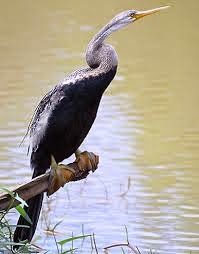
Pecuk Bird Snake (Anhinga melanogaster).

Anhinga melanogaster.Pecuk Bird Snake (Anhinga melanogaster) is called Pecuk Snake because his neck is long and slender resemble snakes, birds included in this group of aquatic birds, please areas such as mangrove waters, lakes, swamps and rivers. The length of his body from head to toe can reach 80-90 centimeters. Small narrow head. Especially the front of his body fur jet black body, the back brown, no white chin stripe along the neck, delicate white feathers cover the edge of the black, grayish feet. While the fawn's neck. Beak length light yellow or gray.

After swimming or diving, bird snake pecuk must first dry the body, because they can not fly if their wings are wet. Nest is a pile of twigs in tall trees near the beach. Whitish eggs, number 2 to 4 grains. Breeding months of December to March, March to June.

Long neck shape is easier for birds to catch fish in the river. In addition to fish, birds also prey on snakes pecuk various aquatic animals such as frogs, newts and the like. These birds are also capable of diving to depths of up to 200 meters under water. The length depends on the extent to which they dive prey is found. Typically ranging from a few minutes to an hour! Obtained prey is swallowed but not directly used to wagging helpless, new chew.

Some observers call it the Oriental Darter bird because it is only located in areas of Asia, particularly India, the Philippines, Indonesia and Thailand. In Indonesia bird pecuk snakes can be found in Java (island Hair, Thousand islands), Sulawesi, Kalimantan (the National Park Betun Kerihun - BKNP) and parts of Sumatra.

Warning.
Pecuk Bird Snake (Anhinga melanogaster) including wildlife laws, as contained in Appendix PP 7 of 1999, and there are provisions in the Act No. 5 of 1990 that:
Any person who deliberately capture, injure, kill, keep, possess, maintain, transport, and sell traded protected animals alive; (Article 21 paragraph (2) letter a), shall be punishable by imprisonment of 5 (five) years and a maximum fine of Rp. 100,000,000.00 (one hundred million rupiah). (Article 40 paragraph (2));
Anyone who intentionally keep, possess, maintain, transport, and sell the traded animals are protected in case of death (Article 21 paragraph (2) letter b), shall be punishable by imprisonment of 5 (five) years and a maximum fine of Rp. 100,000,000.00 (one hundred million rupiah). (Article 40 paragraph (2));
Accidentally traded with selling, storing or skin, body, or other parts of protected animals or goods made ​​from these parts or removing it from a place in Indonesia to another place within or outside Indonesia; (Article 21 paragraph (2) letter d), shall be punishable by imprisonment of 5 (five) years and a maximum fine of Rp. 100,000,000.00 (one hundred million rupiah). (Article 40 paragraph (2));

White Necked Stork Egret length.
Bangau Putih Berleher Panjang.
I wonder who gave the name of the beautiful white-necked stork level as "bird egret", the PP attachment 7 of 1999 which contains a list of protected wildlife, bird egret heron equated with white and one of them speaking Latin Bubulcus ibis, in large dictionary Indonesian heron crane described in the form of fluffy white, predatory fish, frogs, and so his (noun), whereas in the book the birds in Sumatra, Java, Bali and Borneo fruit of MacKinnon et al Bubulcus ibis is the Latin name for the egret bird buffalo, in the book there are 6 types of birds egret namely:


reef egret bird;
bird egret china;
great egret bird;
bird egret silver;
little egret bird;
bird egret buffalo.

This time trying to describe Egret (Bubulcus ibis) which is the smallest bird of the nation's heron-egret. This bird likes to look for food near buffalo or cattle grazing. Body shape more slender than Blekok Rice (ardeola speciosa), although not as slim as the herons-egrets greater. The entire white fur, but during the breeding season, the feathers on the head, neck and back yellow buffalo. Bird egret flew his neck while forming like the letter "s" and not aligned, in contrast to the birds of the stork family (Ciconiidae) and Ibis (Threskiornithidae), which straighten the neck and legs stretched out while flying, bird heron I have ever seen in wetlands essential land bone swamp onion onions western fence bone gods.

Kingdom: Animalia
Phylum: Chordata
Class: Aves
Upakelas: Neornithes
Infrakelas: Neognathae
Superordo: Neoaves
Order: Ciconiiformes
Family: Ardeidae
genus: Bubulcus
species: Bubulcus ibis

Warning.
bird egret birds including reserved, as stated in Appendix PP 7 of 1999, and there are provisions in the Act No. 5 of 1990 that:
Any person who deliberately capture, injure, kill, keep, possess, maintain, transport, and sell traded protected animals alive; (Article 21 paragraph (2) letter a), shall be punishable by imprisonment of 5 (five) years and a maximum fine of Rp. 100,000,000.00 (one hundred million rupiah). (Article 40 paragraph (2));
Anyone who intentionally keep, possess, maintain, transport, and sell the traded animals are protected in case of death (Article 21 paragraph (2) letter b), shall be punishable by imprisonment of 5 (five) years and a maximum fine of Rp. 100,000,000.00 (one hundred million rupiah). (Article 40 paragraph (2));
Accidentally traded with selling, storing or skin, body, or other parts of protected animals or goods made ​​from these parts or removing it from a place in Indonesia to another place within or outside Indonesia; (Article 21 paragraph (2) letter d), shall be punishable by imprisonment of 5 (five) years and a maximum fine of Rp. 100,000,000.00 (one hundred million rupiah). (Article 40 paragraph (2)).
Thank you for reading this article. Written and posted by Bambang Sunarno. sunarnobambang86@gmail.com
author:
http://schema.org/Personal.
https://plus.google.com/105319704331231770941.
name: Bambang Sunarno. 
http://faradice.blogspot.com/2014/09/pecuk-bird-snake-anhinga-melanogaster.html
DatePublished: September 28, 2014 at 11:02
Tag : Pecuk Bird Snake (Anhinga melanogaster).
Code : 42S4EUXRR3UM